
Tag Archives: BMI

BMI Information to Help With Weight Loss

Since it’s inception, BMI (Body Mass Index) has become an incredibly important factor in assessing a persons weight. We have plenty of information relating to BMI dotted around the website. Some of it can be found here.

Body Mass Index (BMI) Flaws Mean a Piece of String Could Work Better

Since its inception body mass index or BMI for short has been the yard stick test for measuring body fat. New research (and a piece of string) now shows that it’s in no way a perfect science.

Body Mass Index test has been around for quite a while now. For some time we have known it is not a perfect method for measuring body fat but it’s been agreed that it can be used as suitable guideline to help with obesity and weight loss. New research by Dr. Margaret Ashwell and Oxford Brookes University has now fully exposed the flaws of BMI using a piece of string as visual aid.

BMI test quick facts.

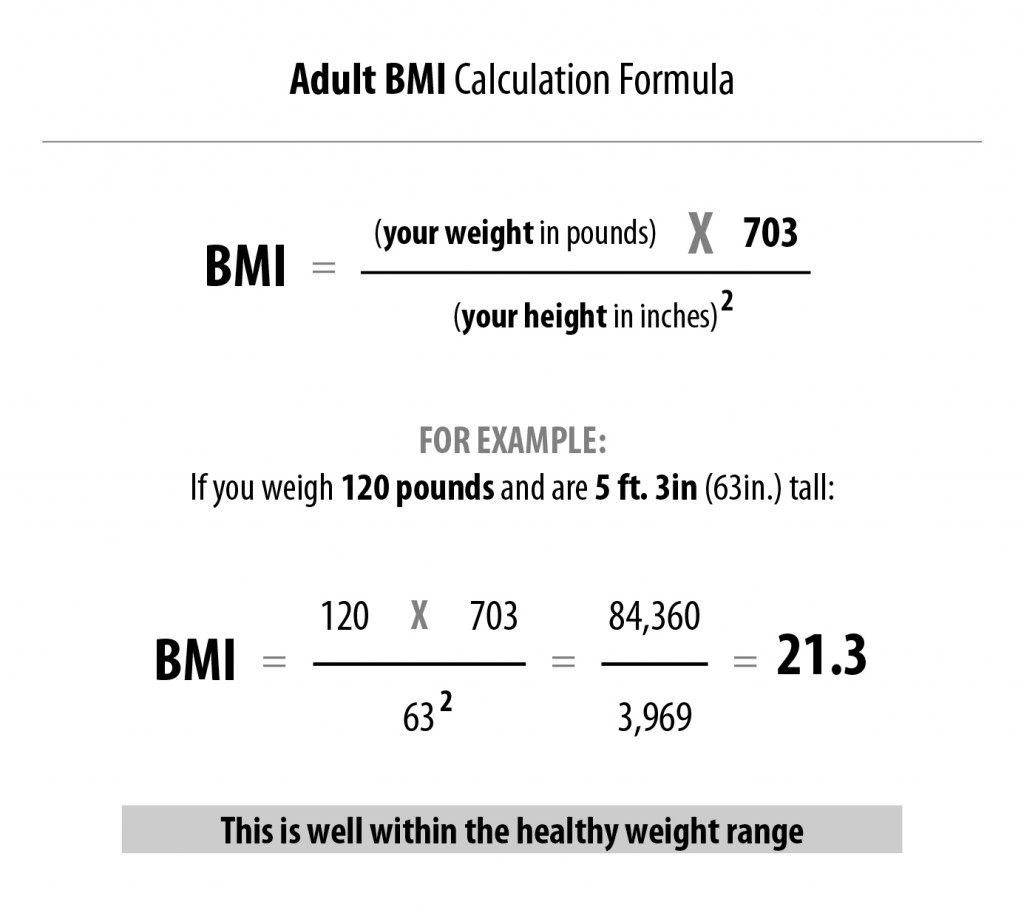
BMI was conceived in the early 1800’s by Belgian Polymath Adolphe Quetelet. He came up with the formula which is used as a test for measuring obesity which he called the Quetelet Index of Obesity. This was then fine tuned into the following formulas:

  1. Imperial English BMI – weight (lbs) x 703 ÷ height (in2)
  2. Metric BMI – weight (kg) / height (m2)

BMI has only been used as a global standard since the 1980’s when there was a rise in cases of obesity across the western world.

Start Your Weight Loss Journey Today!

Get in touch today for a free consultation with a weight loss specialist.

Quick contact form

    Start Your Weight Loss Journey Today!

    Full name: (required)

    Your email: (required)

    Your telephone:

    Choose your nearest clinic:

    Additional comments:

    Email us: kingsweightloss@gmail.com
    Call us: 0208 597 4321

    The trouble with Body Mass Index (BMI).

    The problem with Body Mass Index (BMI) is a two-fold problem that can’t account for important body shape variables. For example, if a person is exceptionally muscular such as a bodybuilder, the standard BMI calculator will show them as being overweight or obese. You only have to look at them to realise how far off the mark is kind of assessment is.

    “BMI gives us an idea of total fat mass, but doesn’t tell us where the fat is located in our body,” “Fat distribution can give us an idea of whether a person is at an increased risk of mortality.” W. Scott Butsch – MD Harvard Medical School

    The other more significant problem is that if a person is a fairly standard shape all over but has a lot of belly fat the current BMI test may give them the all clear from a weight loss perspective. This means a lot of people are not being diagnosed properly and never receiving the treatment they need.

    “If you are measuring waist-to-height ratio you are getting a much earlier prediction that something is going wrong, and then you can do something about it.”Dr. Margaret Ashwell – Oxford Brookes University

    BMI string test and WHtR (waist-to-height ratio).

    In a new weight and health assessment study conducted in Oxford Brookes University a new method has gained a lot of ground. WHtR (waist-to-height ratio) which can be conducted with a piece of string has been shown as a test to be a much better indicator of a person’s weight status and possible obesity.
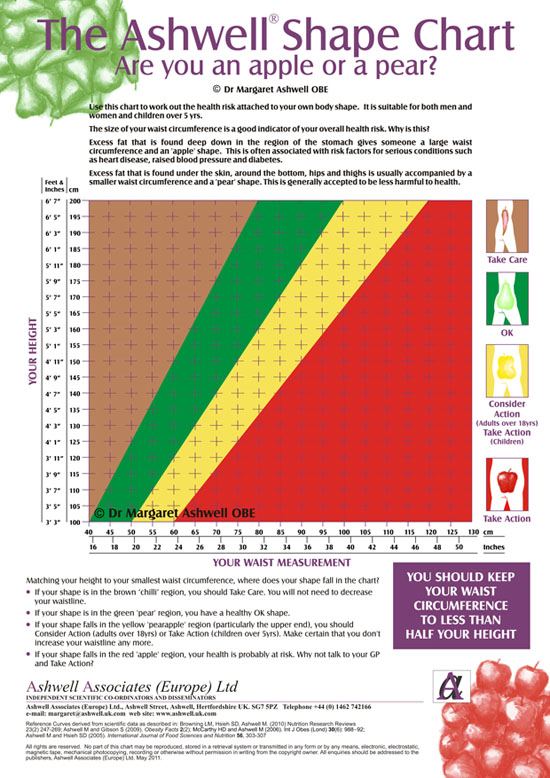
    Ashwell Shape Chart - Alternative to Body Mass Index Chart
    Ashwell Shape Chart – Alternative to Body Mass Index Chart

    The problem is that white fat which generally gathers around the waist can be missed by a regular BMI test. With WHtR (waist-to-height ratio) you measure your height with a piece of string and then fold the string in half and wrap it around your waist to see if it will comfortably fit your circumference. If you fail the string test you should consider seeing your GP or attending a weight loss clinic.

    “The beauty is that you can do it in centimetres or inches, it doesn’t matter. We have got increasing evidence that this works very well with children as well, because whilst they grow up their waist is growing but also their height.” Dr. Margaret Ashwell – Oxford Brookes University

    The study of 3000 people showed that at least 12% of people suffering from obesity or being overweight would be completely missed using the current BMI method.

    Some of the Health Risks Associated with Obesity

    Doctors have recently announced that obesity in the UK is reaching epidemic proportions and are extremely concerned it is doing so. In fact the number of people in the UK that are considered obese has trebled over the past 25 years.

    What classifies a person as obese?

    There are a number of classification parameters for anybody to be informed they are obese. Being obese basically means that a large portion of your body mass is fat and that you are considered overweight for your height and body type. A person is considered obese if they are very overweight with a high degree of body fat. Two common routes to the assessment of obesity are skinfold thickness and the use of body mass index (BMI).

    Start Your Weight Loss Journey Today!

    Get in touch today for a free consultation with a weight loss specialist.

    Quick contact form

      Start Your Weight Loss Journey Today!

      Full name: (required)

      Your email: (required)

      Your telephone:

      Choose your nearest clinic:

      Additional comments:

      Email us: kingsweightloss@gmail.com
      Call us: 0208 597 4321

      The main causes of obesity.

      There has been large consensus on the factors that are driving the increasing percentage of obese people throughout the UK.

      1. Aggressively marketed, cheap, fast food that is often high in energy is readily accessible.
      2. Sedentary lifestyle approaches as people are much less active than they were in the past. Hobbies and leisure pursuits as well as jobs are now usually done sat down.
      3. Higher dependence on cars and public transport to move from A to B rather than walking.

      Worse for the country than smoking?

      There has been a lot of disagreement about the overall impact of obesity on the country with many experts believing obesity is more responsible for general ill health that the effects of smoking. Even if this is not the case being overweight is certainly linked to a plethora of health issues such as:

      • Diabetes
      • Heart disease
      • High blood pressure
      • Arthritis
      • Indigestion
      • Gallstones
      • Some cancers (eg, breast and prostate cancers)
      • Snoring and sleep apnoea
      • Stress, anxiety, and depression
      • Infertility
      • BMI – A common formula

      The Body Mass Index which is commonly known as BMI is used by most weight loss specialists to check for obesity levels. BMI is basically calculated by dividing your weight in kilos by your height in metres squared. Whilst this method is not foolproof and doesn’t apply correctly to bodybuilders who have large muscle mass instead of fat a BMI of above 25 classifies you as overweight with a BMI of 30-40 putting you in the obese category.

      From Wikipedia

      “The body mass index (BMI), or Quetelet index, is a measure for human body shape based on an individual’s weight and height. It was devised between 1830 and 1850 by the Belgian polymath Adolphe Quetelet during the course of developing “social physics”.” – http://en.wikipedia.org/wiki/Body_mass_index

      BMI Formula.

      [responsive]Adult BMI Formula[/responsive]

      There has been a proposal for updating the way BMI is calculated which takes into account more height extremes.

      Alternative obesity measurement.

      There is also another commonly used measurement of obesity which is to take a waist measurement of the patient. This is because fat deposits collecting around the wait area are much more linked to evenly distributed fat around the rest of the body.

      This helps take into account people who are just bigger all round and not necessarily obese. Women who have a waist measurement of 80cm or more along with men who have a waist of 94cm or more are considered more likely to develop the health problems related to obesity.

      Stats on the obesity impact in the UK.

      • 2011 data from England shows 24.8% of adults plus 16.3% of children are obese
      • 2010 data from Scotland shows 27.4% of adults plus 14% of children are obese
      • Recent Government report claimed obesity will cost the NHS £6.4bn per year by 2015

      (adult = ages 16+) (children = ages 2 -15)